The music
Mozart's Requiem
What Mozart's Requiem is, how it came to be unfinished, and what the Requiem programme in St Stephen's Basilica lists, from Introitus to Communio.
Reserve a seat in the basilica ↗Quick answer
Mozart's Requiem in D minor, K. 626, was left unfinished when he died on 5 December 1791, and others completed it. The Requiem programme on the St Stephen's Basilica ticket lists all eight parts, from the Introitus to the Communio. The ticket does not name the performers, so check the calendar entry for your date before you book.
What the programme lists
The main ticket's Requiem programme lists Mozart's Requiem in D minor, K. 626, in eight parts: the Introitus, the Kyrie, the Sequence with its six sections, the Offertorium, the Sanctus, the Benedictus, the Agnus Dei and the Communio. That is the whole work in its usual form, and nothing else is listed for that programme, so the evening is the Requiem alone. The other two programmes on the ticket are different bills. Which programme runs depends on the date, so the calendar entry for your day is what tells you whether the Requiem is the evening you will hear, and your confirmation repeats it.
How the work came about
Mozart began the Requiem in Vienna in late 1791. Count Franz von Walsegg commissioned it for a service on 14 February 1792, the first anniversary of the death of his wife Anna. Mozart died on 5 December 1791 with the work unfinished. Wikipedia records that Joseph Eybler and then Franz Xaver Süssmayr filled in the rest, and that the completed score was dated 1792 and delivered to the count.
How much Mozart finished
When Mozart died, the Introitus was complete in all its vocal and orchestral parts. The Kyrie, the Sequence and the Offertorium existed in skeleton form. Wikipedia notes that the Lacrymosa breaks off after the first eight bars. Süssmayr composed the Sanctus, the Benedictus and the Agnus Dei. The list of eight parts on this page is the one Wikipedia gives for Süssmayr's completion, and the programme on this ticket lists those same parts. Whichever version you hear, the Introitus is the part Mozart himself finished.
The eight parts
The Sequence is the longest and best known. Its sections are the Dies irae, the Tuba mirum, the Rex tremendae, the Recordare, the Confutatis and the Lacrymosa. Wikipedia calls the Recordare the longest movement, at 130 measures. The Offertorium follows with Domine Jesu, and then come the Sanctus, the Benedictus and the Agnus Dei. The work closes with the Communio, Lux aeterna. If you know only the Lacrymosa, the full programme will add the darker Dies irae and the quieter movements around it, and it rewards listening in order from the first bars to the last.
In a basilica
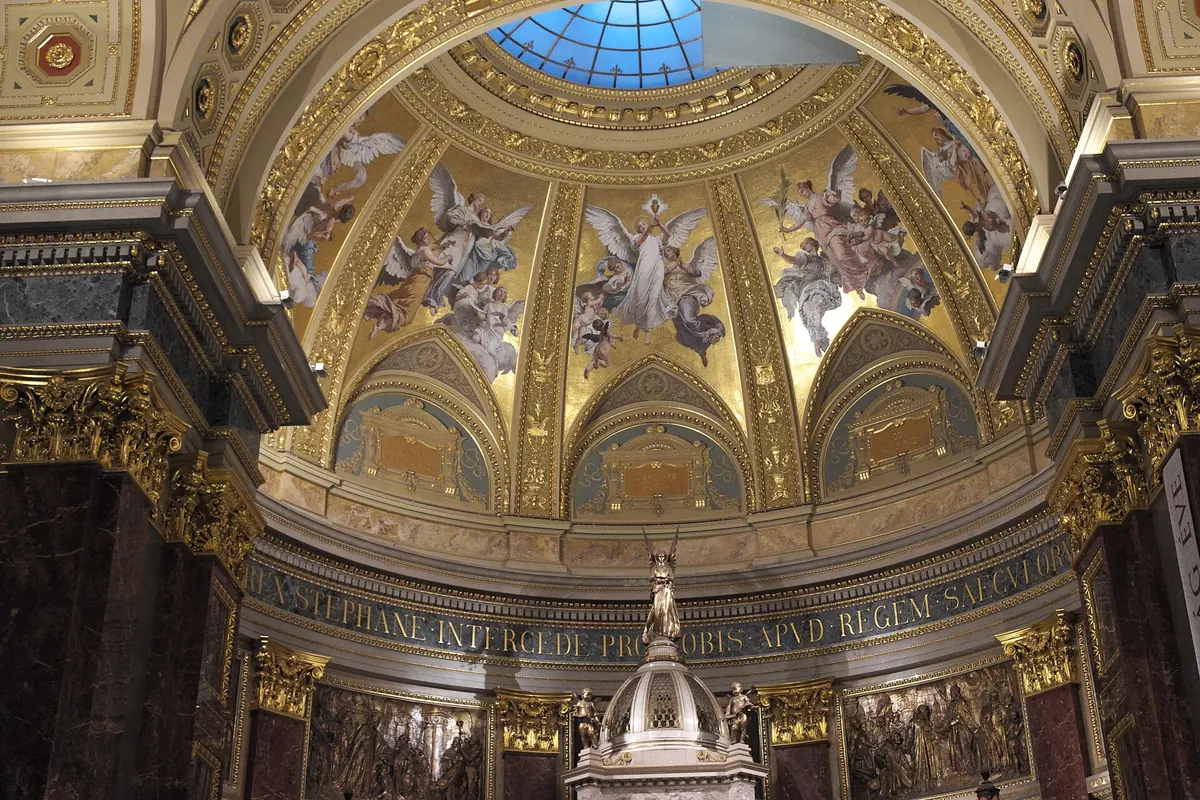
A Requiem is a liturgical work, and the basilica asks that its concerts be sacred, mainly classical music, which this fits. The ticket does not say how many performers sing or play, so do not assume a full choir and orchestra. Guests on the booking page describe small ensembles in the basilica generally, so expect a reduced performance. The basilica's own concert page puts the echo of the church hall at about six seconds, which gives the slow movements room to sound, and which will blur any quick passage somewhat. A Requiem is written for a church, so the setting is the right one.
Before you book
Read the calendar entry for the date you want, since it shows the programme that runs. If the Requiem is your reason for going, choose a date that lists it and read the line-up. If you are choosing between a Requiem and the organ programme, remember that the Requiem is one long work in a single mood, while the organ programme is a mixed bill with a lighter touch. The ticket's seating classes are four, and the basilica does not number seats, so ask the booking page how your class is seated. Booking is free to cancel up to 24 hours ahead through GetYourGuide, so you can hold a date while you decide.
Who this isn't for
A large choir with a full orchestra is not promised by this ticket, so look at the line-up on your date. If you want a lighter evening, choose the Ave Maria programme or the organ programme on the same ticket. If the sombre subject matter does not suit the evening you have in mind, the mixed programmes include more familiar and gentler pieces. And if you would rather hear the Requiem in a concert hall with a large chorus, a church ticket is a different kind of evening. The calendar shows which programme runs on each date.
Frequently asked questions
Who finished Mozart's Requiem?
Joseph Eybler and then Franz Xaver Süssmayr filled in the rest after Mozart died on 5 December 1791. Süssmayr also composed the Sanctus, Benedictus and Agnus Dei.
Does the Requiem programme run every night?
No. The main ticket lists three programmes by day. The calendar for your date shows which one runs.
Is it performed by a full choir?
The ticket does not say. Guests describe small ensembles in the basilica, so check the line-up on your date.
Why does the Lacrymosa matter?
It breaks off after the first eight bars in Mozart's own manuscript, according to Wikipedia. Others completed the work.
Sources